

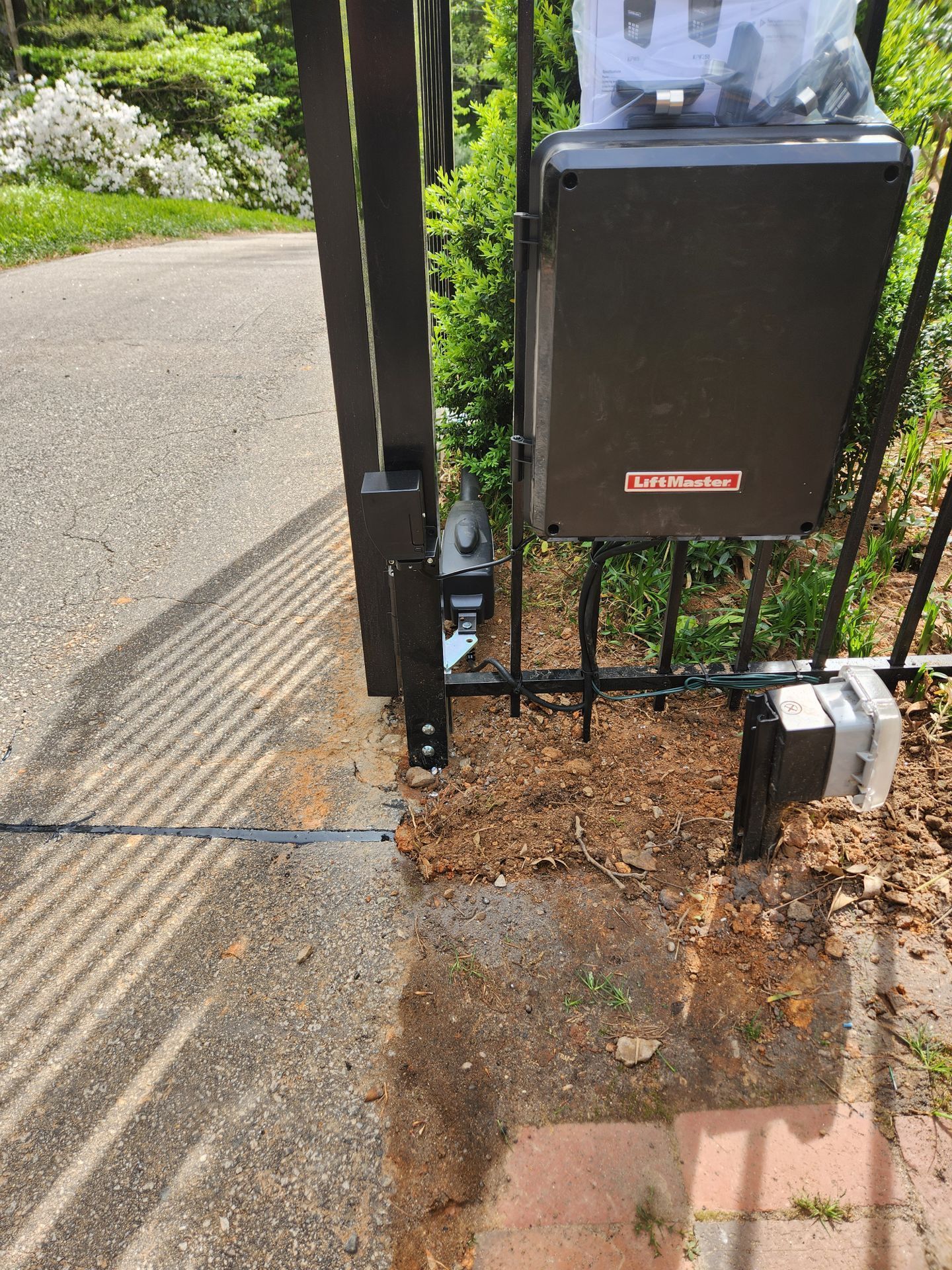
Pulling into the driveway in a summer downpour and stepping out to drag a heavy gate open gets old fast. Gate automation solves that problem and adds a layer of security that a manual gate cannot match. Perimeter Access Solutions provides gate automation in Wilmington, NC and surrounding areas, including Leland, Hampstead, Wrightsville Beach, Carolina Beach, Porters Neck, and Castle Hayne. We automate existing gates, install complete automated gate systems from the ground up, and configure access control so the right people get in without delay. Every gate automation project is sized to the weight, length, and daily use of your gate, then tested for smooth travel, secure closing, and safe operation before we leave the property.
Schedule gate automation
in Wilmington, NC with Perimeter Access Solutions
today.
How Gate Automation Works
Gate automation combines a motorized operator, a control board, an access method, and a set of safety devices into one coordinated system. When a user enters a code, presses a remote, or approaches with a vehicle sensor, the control board signals the operator to open the gate, holds it for a set time, and closes it once the path is clear.
The Gate Operator
The operator is the motor and drive mechanism that physically moves the gate. Operators are rated by the maximum gate weight and length they can handle, as well as how many cycles per day they are built to run. Selecting the correct operator is the single most important decision in any gate automation project, because an undersized motor will overheat, slow down, and fail early.
The Control Board
The control board is the brain of an automated gate system. It manages open and close timing, auto-close delays, obstruction response, soft start and soft stop, and communication with keypads, receivers, and sensors. Modern boards also allow fine adjustment of speed and force so the gate moves smoothly without slamming.
Power Supply and Backup
Automated gates run on standard electrical service, low-voltage transformers, or solar charging systems. Battery backup keeps gate automation working during power outages, which is especially valuable during hurricane season when outages can last for days.
Types of Automatic Gate Operators
Every gate style requires a specific type of operator. Matching the operator to the gate ensures reliable gate automation and protects the gate hardware from unnecessary strain.
Swing Gate Operators
Swing gate automation uses either linear arm operators that push and pull the gate or articulated arm operators that fold as the gate opens. Linear arms suit most residential driveway gates, while articulated arms work well where posts are wide or space behind the gate is tight. Dual swing gates use a synchronized pair of operators so both leaves open and close together.
Slide Gate Operators
Slide gate automation uses a chain drive or rack-and-pinion drive to move the gate horizontally. Rack-and-pinion systems run quietly and are popular for residential automatic gates, while chain-drive operators are a common choice for heavy commercial and industrial gates.
Underground Swing Operators
Underground operators sit beneath the gate hinge point, keeping the mechanism out of sight. This style of gate automation is often chosen for ornamental entrances where a clean appearance matters, though it requires proper drainage planning in areas with a high water table like coastal Wilmington.
Barrier Arm Operators
Barrier arms control vehicle entry at parking lots, marinas, gated communities, and commercial facilities. They cycle quickly and are frequently paired with ticket systems, card readers, or license plate recognition.
Automating an Existing Gate vs. Installing a New Automated Gate System
Many property owners already have a gate and want to know whether it can be automated. The answer depends on the gate's construction, condition, and how it moves today.
Converting a Manual Gate to an Automatic Gate
A manual gate is a good candidate for gate automation when it is square, structurally sound, swings or slides freely by hand, and is mounted on posts strong enough to carry an operator. We inspect hinges, rollers, tracks, and post footings before recommending an operator. Minor issues such as worn hinges or a slight sag can usually be corrected during the gate automation process.
When a New Gate Is the Better Choice
Gates that are warped, rusted through, too heavy for their posts, or built from lightweight materials not designed for motorized use often need replacement. In these cases, a complete automated gate system with a new gate, new posts, and a properly matched operator delivers better long-term performance than retrofitting.
Retrofit Considerations for Coastal Properties
Salt air corrodes hardware and electrical connections faster near the water. Gate automation on coastal properties should use sealed operator housings, stainless or coated hardware, and weather-protected wiring to extend service life.
Request a gate automation estimate in Wilmington, NC from Perimeter Access Solutions.
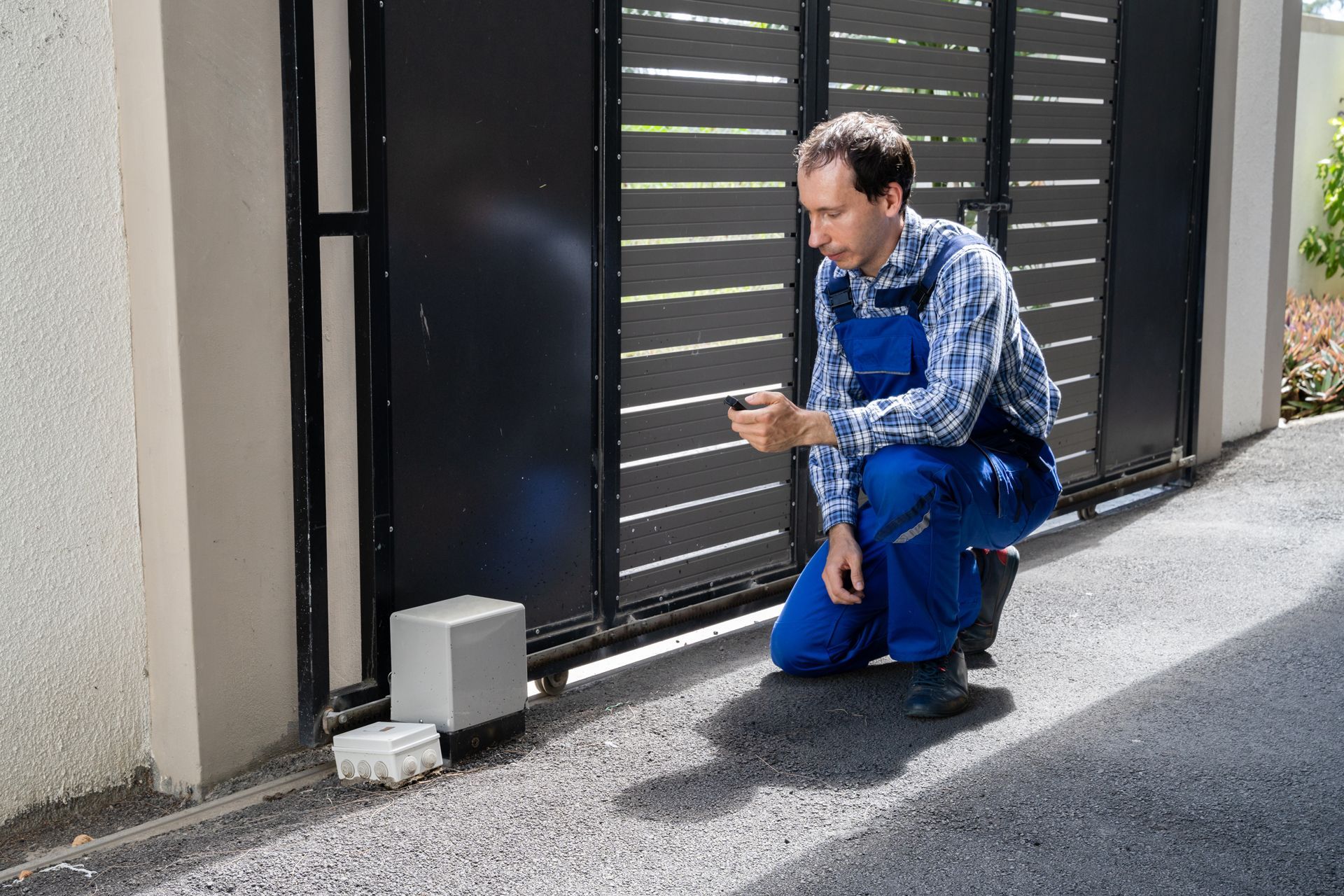
Access Control Options for Automated Gates
Gate automation is only as useful as the way people interact with it. Access control determines who can open the gate, when, and how entry is tracked.
Remote Transmitters
Handheld and visor-mounted remotes are the most common access method for residential automatic gates. Rolling-code technology prevents code copying and keeps the system secure.
Keypads and Call Boxes
Keypads allow entry by code, which is convenient for guests, service providers, and delivery drivers. Call boxes add two-way communication so visitors can request entry from the homeowner or property office.
Card Readers and Key Fobs
Commercial gate automation and multifamily communities often use card or fob credentials. Individual credentials can be added or removed without changing codes for everyone else.
Smartphone and Wi-Fi Control
App-based gate automation lets property owners open the gate remotely, grant temporary access, receive open and close notifications, and review entry history from anywhere.
Vehicle Detection and Free Exit
Ground loops and wireless vehicle sensors allow automated gates to open automatically for exiting vehicles and hold the gate open while a vehicle is in the path. This keeps traffic moving at commercial sites and gated neighborhoods.
Safety Features and Ongoing Performance of Automated Gate Systems
A moving gate carries significant force, so safety is built into every gate automation project we complete. Proper safety devices protect people, pets, and vehicles and help the system meet recognized safety standards for automatic gates.
Photo-Eye Sensors
Photo-eye sensors project an infrared beam across the gate path. If the beam is broken while the gate is closing, the gate stops and reverses.
Edge Sensors
Contact edges mount along the leading edge of the gate and trigger a stop or reverse when they meet resistance. They provide an added layer of protection in pinch points.
Obstruction Detection
The control board monitors motor load and stops the gate if it detects unexpected resistance, protecting both the gate and anything in its path.
Manual Release
Every automated gate includes a manual release so the gate can be opened by hand during a power loss or emergency.
Maintenance for Long-Term Gate Automation Performance
Gate automation benefits from routine service, including lubricating moving parts, checking operator mounting, testing safety devices, cleaning sensors, and inspecting batteries. In coastal areas, twice-yearly maintenance helps prevent corrosion-related failures and keeps automatic gates running smoothly.
Frequently Asked Questions About Gate Automation in Wilmington, NC
How much does gate automation cost in Wilmington, NC?
Gate automation cost depends on the gate's size and weight, the operator type, the power source, and the access control features selected. Automating a single residential swing gate costs less than a commercial slide gate with card readers and vehicle detection. An on-site evaluation provides an accurate quote.
Can my existing gate be automated?
Most existing gates can be automated if they are structurally sound, move freely by hand, and are mounted on posts that can support an operator. Gates that sag, bind, or are badly corroded may need repairs or replacement before gate automation.
What is the difference between automatic gates and automated gates?
The terms are used interchangeably. Both describe a gate that opens and closes using a motorized operator controlled by a remote, keypad, sensor, or other access device.
Do automatic gates work during a power outage?
Automatic gates with battery backup continue operating during a power outage for a limited number of cycles. Every automated gate also has a manual release so it can be opened by hand.
Is solar gate automation reliable in Wilmington?
Solar gate automation works well in the Wilmington area when the panel and battery are properly sized for the gate's daily use. Low-traffic residential gates are ideal candidates, while high-traffic commercial gates usually perform best on standard electrical service.
Which is better for automation, a swing gate or a slide gate?
Slide gates are better for sloped driveways, wide openings, and areas with limited space in front of the gate. Swing gates are common for residential driveways with level ground and enough room for the gate to open.
How long does a gate automation installation take?
Automating an existing gate typically takes one to two days. A complete automated gate system with a new gate, posts, electrical work, and access control can take longer depending on concrete curing time and site conditions.
Are automated gates safe for children and pets?
Automated gates installed with photo-eye sensors, edge sensors, and obstruction detection are designed to stop and reverse when something is in their path. Regular testing of these devices keeps the gate operating safely.
Can I open my automatic gate with my phone?
Yes, Wi-Fi and cellular gate controllers allow you to open and close an automatic gate from a smartphone app, share temporary access codes, and receive alerts when the gate is used.
How long does a gate operator last?
A properly sized and maintained gate operator commonly lasts many years. Lifespan depends on daily cycle count, gate weight, environmental exposure, and how consistently routine maintenance is performed.
Does gate automation need regular maintenance?
Yes, automated gate systems should be serviced at least once or twice a year. Coastal properties exposed to salt air benefit from more frequent inspections to prevent corrosion and keep safety devices working.
Can gate automation connect to my home security system?
Many gate operators and access controllers integrate with home security systems, smart home platforms, intercoms, and cameras, allowing gate activity to be monitored and controlled alongside other security features.