

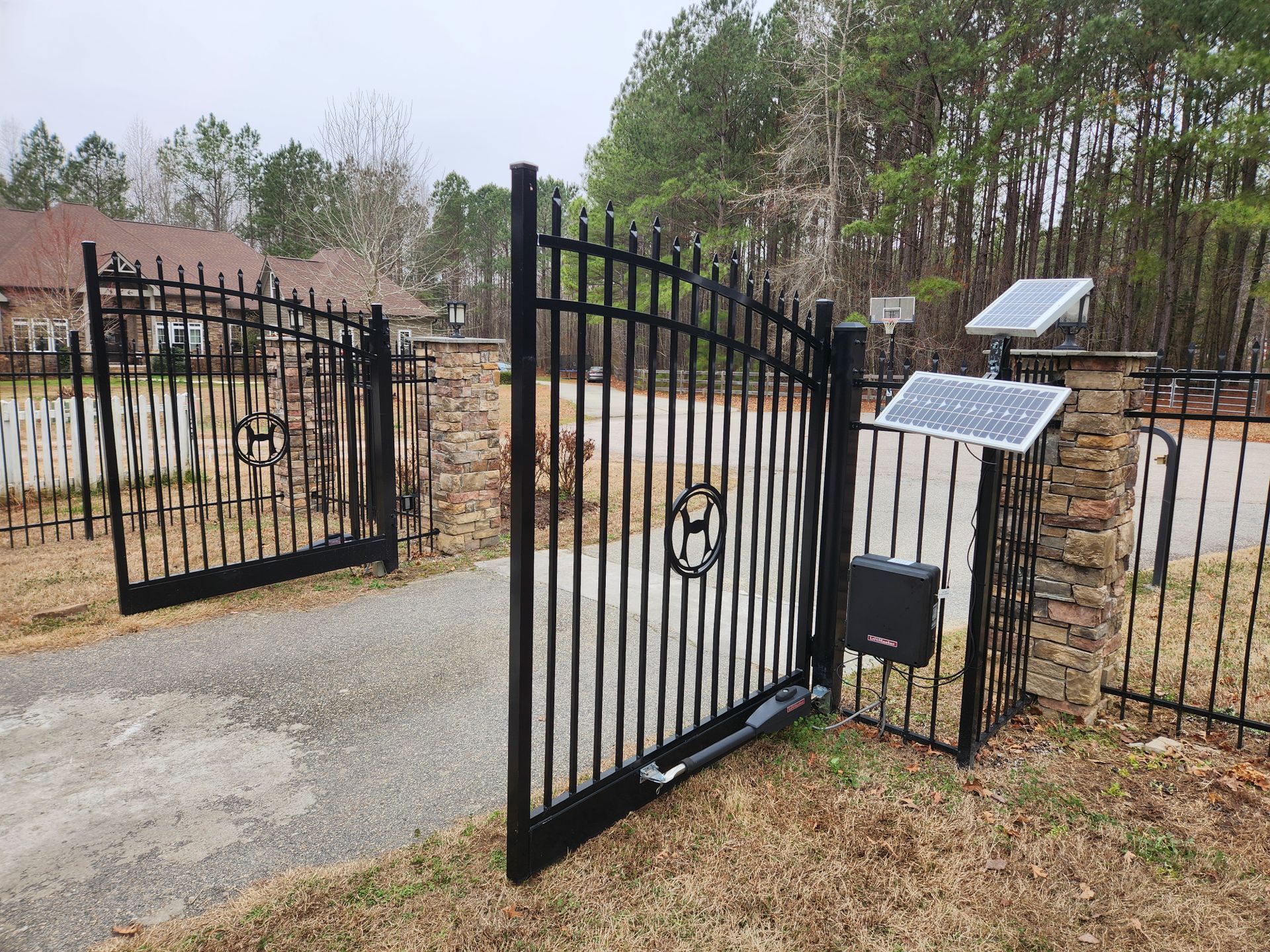
When an automatic gate stops working, it does more than cause inconvenience. Residents get locked out, customers cannot enter, deliveries stall, and an open gate leaves a property unsecured. Perimeter Access Solutions provides gate operator repair in Wilmington, NC and surrounding areas, including Leland, Hampstead, Wrightsville Beach, Carolina Beach, Porters Neck, and Castle Hayne. We diagnose the actual cause of the failure, whether it is a motor, control board, sensor, power issue, or mechanical problem with the gate itself, and repair it correctly so the same problem does not return next month. Our gate operator repair service covers residential driveway gates, HOA entrances, commercial lots, and industrial facilities.
Schedule gate operator repair
in Wilmington, NC With Perimeter Access Solutions
today.
Common Gate Operator Problems We Repair
Most calls for gate operator repair fall into a handful of recognizable symptoms. Each symptom points to a range of possible causes, which is why accurate diagnosis matters before any parts are replaced.
Gate Will Not Open or Close
A gate that does not respond at all may have a tripped breaker, blown fuse, dead battery, failed transformer, damaged control board, or a disconnected access device. Gate operator repair begins by confirming power at each stage of the system before moving to the operator itself.
Gate Opens but Will Not Close
This is one of the most frequent automatic gate repair calls. It is often caused by a misaligned or dirty photo-eye sensor, a stuck vehicle loop, a faulty exit sensor, or a control board setting that is holding the gate open.
Gate Starts and Stops or Reverses on Its Own
Erratic movement usually indicates that the operator is sensing resistance. Binding hinges, worn rollers, debris in a track, low battery voltage, or incorrect force settings can all cause a gate to reverse unexpectedly.
Grinding, Humming, or Clicking Without Movement
Mechanical noise without travel points to stripped gears, a failed motor, a seized gearbox, a broken chain, or a worn rack. These issues require electric gate repair at the drive level.
Remotes or Keypads Not Working
When the gate operates manually from the control board but not from remotes or keypads, the issue is usually a receiver failure, antenna damage, programming loss, or dead transmitter batteries.
Gate Moving Slowly
Sluggish travel can result from weak batteries, a failing motor, low voltage on long wire runs, or a gate that has become heavier to move due to sagging or corrosion.
Our Gate Troubleshooting Process
Effective gate troubleshooting follows a structured process. Replacing parts by guesswork costs property owners money and often leaves the real problem in place.
Initial Inspection
We start by observing the gate's behavior, reviewing any error codes on the control board, and talking with the property owner about when the problem began and what changed. Recent storms, power outages, landscaping work, or vehicle contact often provide important clues.
Power and Electrical Testing
Gate troubleshooting includes testing incoming power, transformers, fuses, batteries, and wiring connections. Corroded terminals and water intrusion are common findings on coastal properties.
Mechanical Evaluation
The operator is disconnected and the gate is moved by hand to check for binding, sagging, or worn hardware. If the gate does not move freely on its own, the operator will struggle no matter how well it is repaired.
Control Board and Safety Device Testing
Inputs from sensors, loops, edges, and access devices are tested one by one. This step identifies faulty components that can trigger false stops, prevent closing, or keep the gate from responding.
Repair and Verification
Once the cause is confirmed, we complete the gate operator repair, reset limits and force settings, and run the gate through multiple full cycles to confirm consistent, safe operation.
Automatic and Electric Gate Repair by Component
Gate operator repair often focuses on a specific component within the system. Understanding which part has failed helps determine whether a repair or replacement makes more sense.
Motor and Gearbox Repair
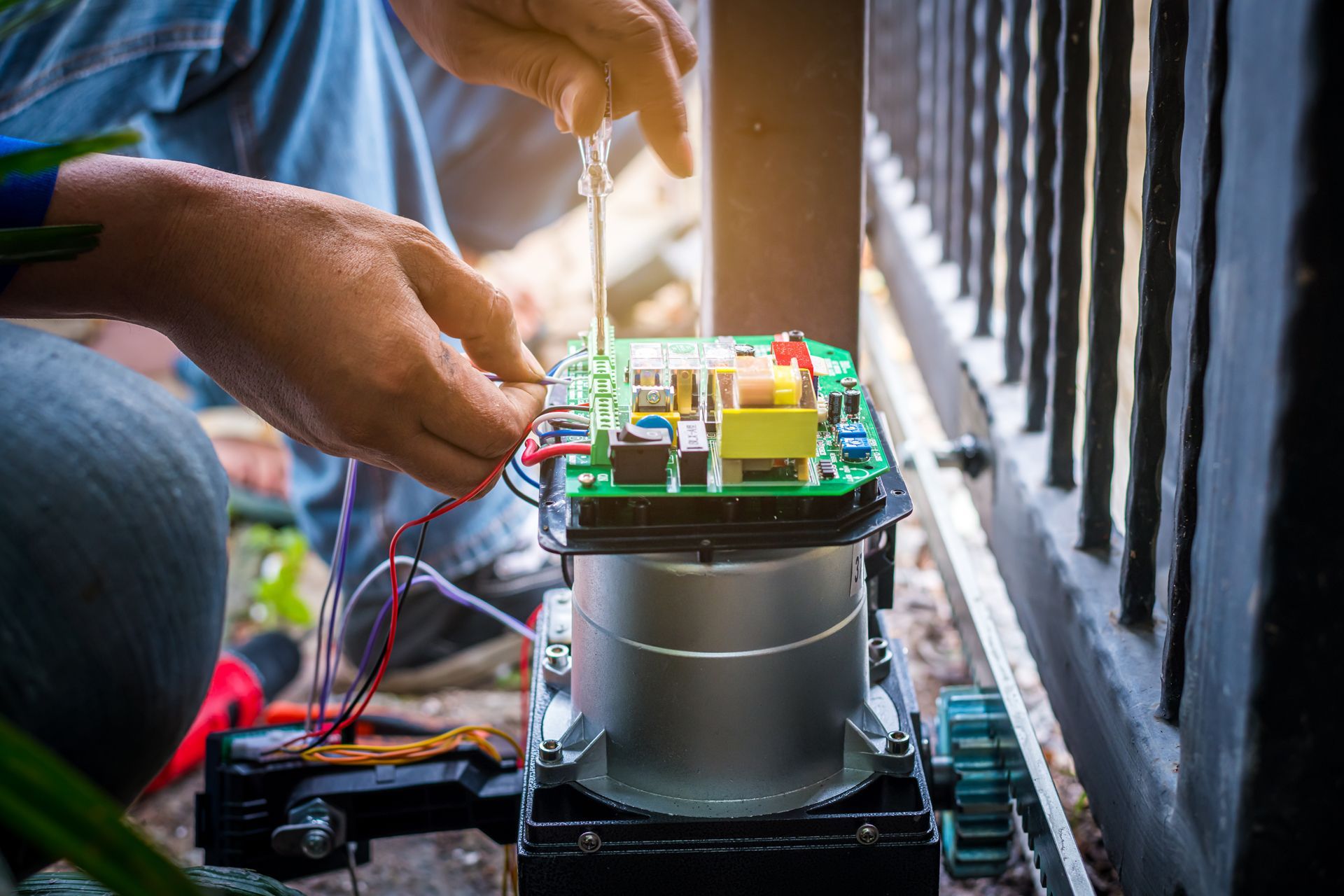
Motors wear out from age, overheating, and excessive load. Gearboxes can strip or seize, especially when a gate has been forced manually while engaged. Electric gate repair at this level may involve replacing gears, bearings, or the motor assembly.
Control Board Repair and Replacement
Control boards are vulnerable to lightning, power surges, moisture, and insects nesting inside housings. Gate operator repair may include replacing a damaged board, reprogramming settings, and adding surge protection to prevent repeat failures.
Battery and Charging System Repair
Backup batteries typically need replacement every few years. Solar-powered gates may also need panel cleaning, repositioning, or charge controller replacement to maintain reliable operation.
Sensor and Safety Device Repair
Photo-eyes, contact edges, and vehicle loops must work correctly for safe gate operation. Automatic gate repair often includes realigning photo-eyes, replacing damaged edges, and repairing or replacing cut or failed ground loops.
Gate Opener Repair for Access Devices
Gate opener repair for access devices includes replacing receivers, reprogramming remotes, repairing keypads, and restoring intercom and smartphone connections.
Chain, Rack, and Arm Repair
Slide gate chains stretch and rust, gear racks wear and separate, and swing gate arms bend from impact. These parts are repaired or replaced and realigned during gate operator repair.
Request automatic gate repair in Wilmington, NC from Perimeter Access Solutions.
Gate Operator Repair for Residential and Commercial Properties
The demands placed on a gate operator differ significantly between a private driveway and a busy commercial entrance.
Residential Gate Operator Repair
Residential gate operator repair typically involves swing or slide operators on driveway gates. Common issues include weather-related electrical faults, battery failure, sensor misalignment, and wear on hinges and rollers.
Commercial and HOA Gate Operator Repair
Commercial and community gates cycle far more often, which accelerates wear. Gate operator repair at these sites often involves high-duty operators, card access systems, telephone entry, and vehicle detection loops. Minimizing downtime is a priority because a failed gate affects every resident, tenant, or customer.
Repairing Operators on Older Systems
Older gate operators may no longer have replacement parts readily available. In these cases, we explain whether gate operator repair is still practical or whether replacing the operator will provide more reliable long-term performance.
Storm and Impact Damage
Hurricanes, falling limbs, flooding, and vehicle strikes can damage operators, posts, and gates. Post-storm gate operator repair includes checking for water intrusion, electrical damage, bent components, and shifted footings.
Gate Maintenance to Prevent Future Repairs
Routine gate maintenance is the most effective way to reduce emergency breakdowns and extend operator life, especially in a coastal environment.
Lubrication and Hardware Care
Gate maintenance includes lubricating hinges, rollers, chains, and moving parts with products suited for outdoor and salt air exposure.
Electrical and Battery Checks
Inspecting connections, cleaning corrosion, testing battery voltage, and checking surge protection helps prevent sudden electrical failures.
Safety Device Testing
Photo-eyes, edges, and loops are tested during every gate maintenance visit to confirm the gate stops and reverses correctly.
Alignment and Limit Adjustments
Gates shift over time as posts settle and hardware wears. Adjusting alignment and travel limits keeps the operator from overworking.
Recommended Maintenance Frequency
Most gates benefit from gate maintenance once or twice a year. Commercial gates and coastal properties near the water often require more frequent service.
Frequently Asked Questions About Gate Operator Repair in Wilmington, NC
Why did my automatic gate stop working?
Automatic gates commonly stop working due to power loss, dead batteries, tripped breakers, failed control boards, sensor problems, or mechanical binding. Proper gate troubleshooting identifies which component has failed.
Why will my gate open but not close?
A gate that opens but will not close is usually being held open by a blocked or misaligned photo-eye, a stuck vehicle loop, a faulty exit sensor, or an incorrect control board setting.
How much does gate operator repair cost?
Gate operator repair cost depends on the failed component, the operator type, and the amount of labor required. Sensor realignment or battery replacement costs far less than replacing a motor or control board.
Should I repair or replace my gate operator?
Repair is usually the right choice when the operator is in good overall condition and parts are available. Replacement makes more sense for older operators with repeated failures, discontinued parts, or major internal damage.
Can a gate operator be damaged by lightning?
Yes, lightning and power surges frequently damage control boards, receivers, and keypads. Surge protection on power and communication lines helps reduce the risk of electrical damage.
Why is my gate opening and closing by itself?
Unexpected movement can be caused by a faulty receiver, a stuck button on a remote or keypad, interference, a malfunctioning vehicle loop, or a control board fault.
How do I open my electric gate during a power outage?
Most electric gates have a manual release that disengages the operator so the gate can be moved by hand. Gates with battery backup may continue operating for a limited number of cycles.
Why is my gate remote not working?
A non-working remote is often caused by a dead battery, lost programming, a damaged receiver, or antenna problems. Gate opener repair can restore remote function or replace the receiver.
What causes a gate to move slowly?
Slow movement is often caused by weak batteries, a failing motor, voltage loss on long wire runs, or mechanical resistance from sagging gates and worn hardware.
How often should automatic gates be maintained?
Automatic gates should receive gate maintenance at least once or twice a year. Coastal properties and high-traffic commercial gates benefit from more frequent service.
Can you repair gate operators from different manufacturers?
Gate operator repair is available for many operator types and brands, including swing, slide, and barrier arm systems. Parts availability for older models can affect whether repair or replacement is recommended.
What should I check before calling for gate repair?
Check that the breaker is on, the manual release is engaged, nothing is blocking the photo-eyes, and the remote batteries are good. If the gate still does not work, professional gate troubleshooting is the next step.